

Family History
Our roots lie in Annaberg, where our family once ran a carpentry and furniture workshop. Our grandfather chose a different path, pursuing an academic career that took him away from home. Yet, our family’s bond with Annaberg has remained strong through the generations, and we feel a deep sense of duty to honor his legacy. Today, it’s the grandchildren who have taken on the challenge of lovingly restoring and preserving the old family buildings — a lifelong project that’s never truly finished.
One thing, however, will never fade: our love for the Ore Mountains. And we’re delighted to share that love with you.
Annaberg-Buchholz
The Upper Ore Mountains were settled by Frankish farmers from the 12th century onwards. When rich silver veins were discovered in 1491, Annaberg developed rapidly. In the 16th century, with a population of 8,000, the town was one of the largest in the German-speaking world. Silver mining made the kings of Saxony rich. However, the silver mines were soon exhausted and the population needed other sources of income; as a result, a diverse range of crafts developed, which – through home-based work and small workshops – made the Ore Mountains’ products world-famous: Christmas decorations made of wood, bobbin lace, and paper products such as the Annaberg folded Christmas star.
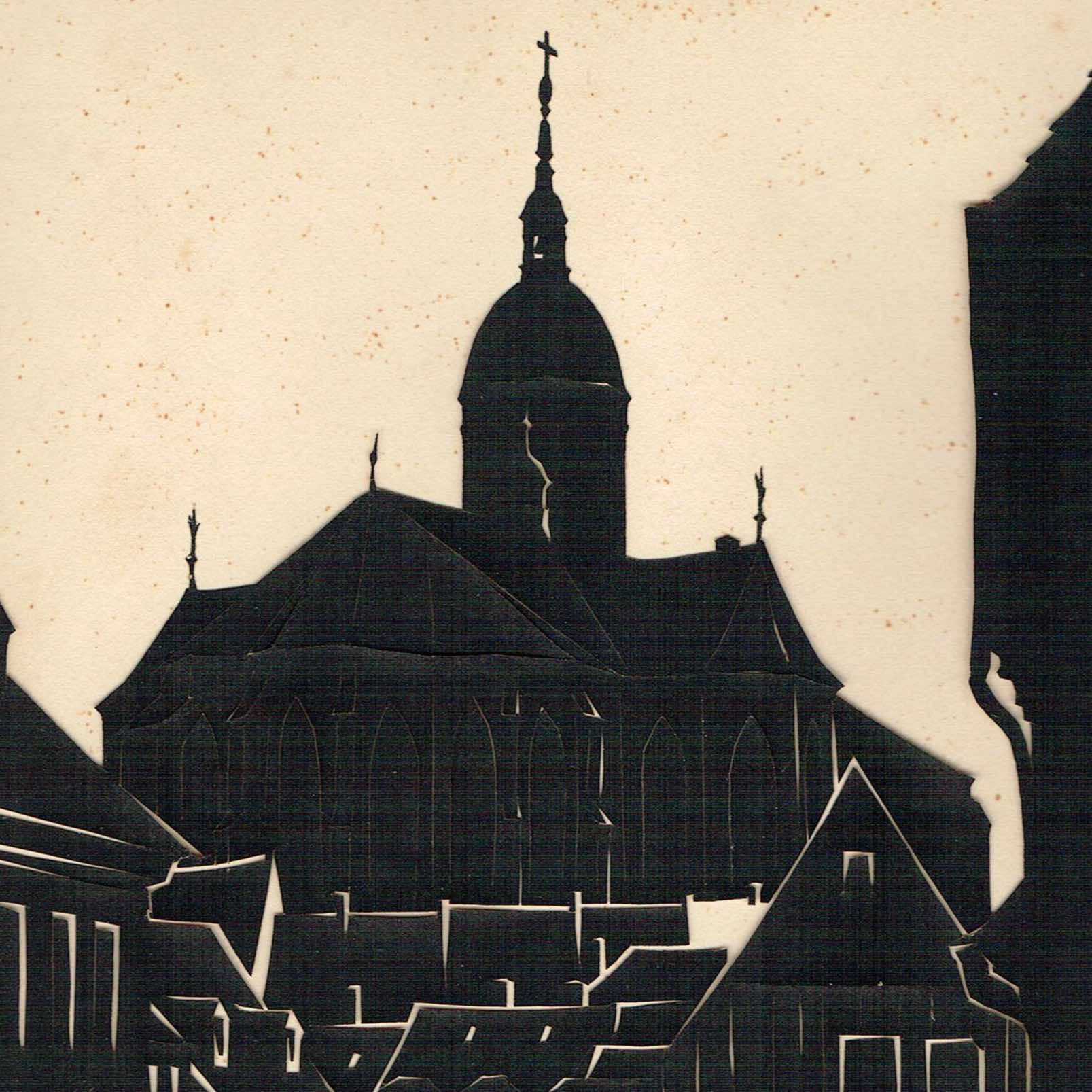
Large towns have large churches. Annaberg is home to St Anne’s Church, one of the largest late-Gothic hall churches. From the outside, the church – visible from afar – resembles a fortress; inside, it is light and delicate. The ‘Mining Altar’ is famous for its depiction of miners’ lives on the reverse side. The tower of St Annen’s Church is still inhabited by a family of tower keepers – the only one of its kind in Germany.
Today, Annaberg-Buchholz offers its 20,000 residents and tourists a wide range of attractions. There is the Eduard-von-Winterstein-Theatre, a wonderful Christmas market featuring Germany’s largest mountain parade on the fourth Sunday of Advent; the ‘Fichtelberg-Oberwiesenthal’ ski resort is just 20 km away; day trips to Chemnitz, Karlsbad, Dresden or even Prague are possible; and the Erzgebirge Mining Region has been a UNESCO World Heritage Site since 2019. Show mines give visitors an insight into this way of life. The surrounding area is ideal for walks, the thermal springs are perfect for relaxation, and the palaces and castles are popular destinations for day trips.